When we step up and join the struggle for justice in our world we help bring life and hope to those who have been victimized for far too long. That alone is worth the sacrifice…and the risk. But Gary Haugen, President of the International Justice Mission, unpacks a few other fruits that are born in the fight for justice in his inspiring little book Just Courage:
First, we help bring about an equilibrium in power that helps make justice sustainable. Bullies oppress people not because they are courageous, but because the powerless are vulnerable. When we stand with the powerless and empower them to exercise their voice and battle for justice, aggressors back down.
Second, we are changed. Haugen writes, “ Give me a Christian who has walked with Jesus in the struggle against aggressive, violent injustice, and I will show you a Christian who has been changed by the journey.” Far too many church-going people are near comatose with trivial pursuits and boring routines. We need to take risks. We need to stand up against people and systems that probably scare us for the sake of the victims and, as it turns out, for our own sake.
Years ago, in our relentless pursuit of safety, the cul-de-sac was inserted into the suburban landscape to address our anxieties about the danger that traffic presents to our children. The thought was that the cul-de-sac would both slow and reduce traffic and our kids would be safer. Ironically, we have since discovered that the cul-de-sac is far more dangerous to our children than through traffic because cars backing up injure far more children than cars moving forward. By trying to protect our kids we actually put them at much greater risk. We make that mistake in lots of ways with our kids and with ourselves as well. Haugen notes that as we have sought safety from a “dangerous world and threatening culture” we have “turned inward to the prosperous cul-de-sac, only to find spiritual atrophy, mediocrity, and boredom that is lethal to the soul.” We are created to fight for what is good, not to run from what is bad. God’s call to “seek justice, rescue the oppressed, defend the orphan, and plead for the widow” is a divine antidote to our trivial pursuits. It is a pathway to personal transformation and courage.
And finally, the engagement of injustice adds integrity to our faith and makes following Jesus more compelling. Over the centuries the validity of the life Jesus offers has been expressed differently in different eras. In some eras it was most effectively expressed through acts of compassion; sometimes through non-violent resistance, and sometimes through proclamation. But today, the truth of what we say we believe might best be seen through acts of justice.
But just what is injustice? Scripture defines injustice as the abuse of power by taking away the good things God intended all people to have—namely their life, freedom, dignity, and the just fruit of their labor and love. So when a stronger person takes away what rightfully belongs to all people, the sin of injustice has occurred.
Where is dignity being taken from someone you know? Where are people working for wages that won’t be enough to feed their children? Where are the powerless being taken advantage of by landlords, governments, or employers? Probably not as far away as you might think. As we have befriended the powerless we have found the fight is often right nextdoor.
Friday, December 31, 2010


Thursday, December 23, 2010
solid food
Among a sea of hopes for the new year, I pray especially for an increased appetite for the Holy Scriptures. As I was reading Paul's letter to Timothy this morning I was reminded again how vital it is to take in Gods' written Word deeply and often. 2 Timothy 3:16-17 tells us that the Scriptures:
• Teach us what is true
• Expose what is wrong in our lives
• Coach us to do right
• Prepare us to do every good work
Wow. So if I'm not regularly feeding my soul with God's Word, how will I know what's really true? How will I really know what's right and what's wrong in my life? How will I make course corrections? How will I be able to do what is truly good?
Honestly, I can easily think of lots of other viable options to help me address these questions because I go to them so often. But this year I want to turn to the irreplaceable Scriptures first and let all the other good resources take their complementary place.
• Teach us what is true
• Expose what is wrong in our lives
• Coach us to do right
• Prepare us to do every good work
Wow. So if I'm not regularly feeding my soul with God's Word, how will I know what's really true? How will I really know what's right and what's wrong in my life? How will I make course corrections? How will I be able to do what is truly good?
Honestly, I can easily think of lots of other viable options to help me address these questions because I go to them so often. But this year I want to turn to the irreplaceable Scriptures first and let all the other good resources take their complementary place.
Thursday, November 18, 2010
vision
Over the past 2 weeks I've been teaching on the role of vision in our lives. Simply stated, vision--from my perspective--is a picture of the life God has created me to live.  It's not so much a picture of my preferable future as it is my best understanding of God's preferable future for me. It naturally changes over time as it comes into sharper focus, but it always inspires and moves us. Here's my best understanding of the life and the work I believe God dreams of for me:
The attached picture of the boats in the harbor is another way for me to visualize my vision. They're not just boats, they're working boats...fishing boats. Some are bigger and some are smaller. Each of them is unique. Some will go farther out to sea and others just beyond the harbor. But all of them have a job to do.
What do you imagine when you think of the life God created you to live?
 It's not so much a picture of my preferable future as it is my best understanding of God's preferable future for me. It naturally changes over time as it comes into sharper focus, but it always inspires and moves us. Here's my best understanding of the life and the work I believe God dreams of for me:
As I experience the shifting tides of culture and see a new kind of church emerging wherever I go, I’m compelled to co-create working harbors that provide...
Time for people to linger with God and to be shaped in the crucible of community;
Space for people to explore, experience, and extend the missional life they are meant to live; and a
Place for people to gather the essential gear they will need to live that life well on whatever seas they are called to navigate.
The attached picture of the boats in the harbor is another way for me to visualize my vision. They're not just boats, they're working boats...fishing boats. Some are bigger and some are smaller. Each of them is unique. Some will go farther out to sea and others just beyond the harbor. But all of them have a job to do.
What do you imagine when you think of the life God created you to live?
Wednesday, September 22, 2010
girls (written by laurie)
Over the last two weeks I've had the opportunity to spend time with a woman in Tijuana, who's a wife and mom of 3. Over lunch one day, she talked about a ministry she's involved in that gives food and a bath to the poorest of poor in Tijuana, in addition to trying to get them uniforms so that they can attend school. She has a heart for the girls but the ministry she works with tends to prioritize the boys. As she shared her struggle and frustration, I thought about the book my family and I have been reading this summer, Three Cups of Tea.
It's the story of Greg Mortenson, a mountain-climber who came face to face with poverty in the rugged mountains of Pakistan and began building schools for children--but especially schools for girls. When asked why he focused on educating girls, Mortenson says: "Once you educate the boys, they tend to leave the villages and go search for work in the cities," Mortenson explains, "But the girls stay home, become leaders in the community, and pass on what they've learned. If you really want to change a culture, to empower women, improve basic hygiene and health care and fight high rates of infant mortality, the answer is to educate girls...If the girls can just get to a fifth grade level, everything changes."
This has caused me to think about the Nepalese refugee families here in San Diego that we work with as they struggle to figure out life here in the US. We primarily work on their English but this gives rise to many other significant challenges. Things like how to deal with children whose behavior is out of control. Or what to do with a teenage daughter who is depressed. Or how a mother can stay healthy and keep her milk supply up while her newborn son is in the hospital.
And then there's the recovery home in our neighborhood where women of different ages fight to stay sober and change destructive patterns of behavior in their lives. Or the old homeless woman who lived in the alley behind our house for a few months, tenaciously fighting for what she needed each day. And I think of my sister and brother-in-law who have lovingly raised and continue to care for their 35 year old daughter who has Down's Syndrome.
I'm sure as you read this, you can think of girls and women in your life who have needs, some of them very great needs. Why not take a moment to pray for them and even ask God how you can be a part of changing the lives of girls nearby as well as girls far, far away? Sometimes our world is changed one girl at a time.
It's the story of Greg Mortenson, a mountain-climber who came face to face with poverty in the rugged mountains of Pakistan and began building schools for children--but especially schools for girls. When asked why he focused on educating girls, Mortenson says: "Once you educate the boys, they tend to leave the villages and go search for work in the cities," Mortenson explains, "But the girls stay home, become leaders in the community, and pass on what they've learned. If you really want to change a culture, to empower women, improve basic hygiene and health care and fight high rates of infant mortality, the answer is to educate girls...If the girls can just get to a fifth grade level, everything changes."
This has caused me to think about the Nepalese refugee families here in San Diego that we work with as they struggle to figure out life here in the US. We primarily work on their English but this gives rise to many other significant challenges. Things like how to deal with children whose behavior is out of control. Or what to do with a teenage daughter who is depressed. Or how a mother can stay healthy and keep her milk supply up while her newborn son is in the hospital.
And then there's the recovery home in our neighborhood where women of different ages fight to stay sober and change destructive patterns of behavior in their lives. Or the old homeless woman who lived in the alley behind our house for a few months, tenaciously fighting for what she needed each day. And I think of my sister and brother-in-law who have lovingly raised and continue to care for their 35 year old daughter who has Down's Syndrome.
I'm sure as you read this, you can think of girls and women in your life who have needs, some of them very great needs. Why not take a moment to pray for them and even ask God how you can be a part of changing the lives of girls nearby as well as girls far, far away? Sometimes our world is changed one girl at a time.
Friday, September 10, 2010
a kingdom investment in real estate
Twelve months ago we moved two streets over into an old Victorian house in our neighborhood that has quickly become our home, the home to another family in our community, and the home-away-from-home to many other friends and family from around the world. This big historic house is more than just a home though; it's the hub for our missional community; it's the site of countless times of leadership training and coaching; it's a house of worship and prayer; and it's a lighthouse in our
neighborhood.
 It's also up for sale. Our landlord recently told us that he needs to sell the house and that he would really like to sell it to us so that we can continue to use it to advance the Kingdom. Well, we'd like to buy it. We've seen God bless this home and those that pass through it and we just don't feel like God is done with it yet! But if God wants us to keep this home, we'll need help. If you're potentially interested in investing in a property like this, read further. If not, could you simply stop and pray that God would provide all the resources we would need to keep and use this property for God's purposes? Thanks!
Property details
The property is a 5-bedroom, 3-bathroom house on a huge lot with an unfinished granny cottage in the backyard. The main house is approximately 2300 sq.ft. and the cottage is another 400 sq.ft. With 20% down, the rental income on the house would more than cover the PITI payments and leave sufficient reserves for maintenance, improvements, and potential cash flow to the investors. The house may also qualify for historic property status and that would reduce the property tax rate by
approximately 90%.
We are personally ready and willing to invest in the property but we would need a small handful of kingdom-minded partners to
invest with us as equity share partners. If this is something you might be interested in considering, can I just ask you to do 2 things? First, click on the link below to watch a short little video that was taken in our house a few months ago and ask God if He might want you to invest in this house and the ministry that flows from it. And second, if you feel God nudging you, (or you're at least interested in getting more information to explore it further), let me know and let's talk. Thank you!
A Day in the Life of NieuCommunities
neighborhood.
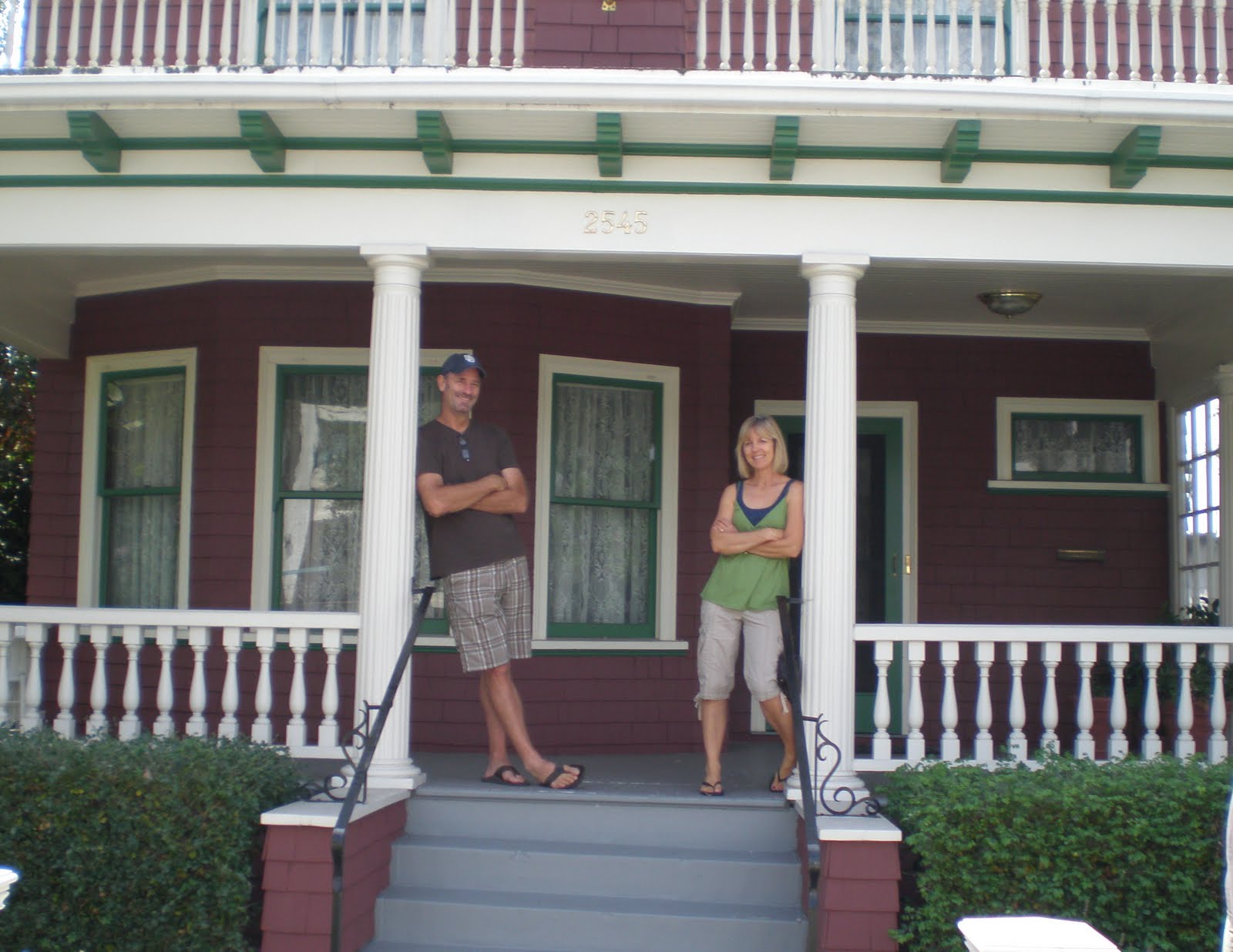 It's also up for sale. Our landlord recently told us that he needs to sell the house and that he would really like to sell it to us so that we can continue to use it to advance the Kingdom. Well, we'd like to buy it. We've seen God bless this home and those that pass through it and we just don't feel like God is done with it yet! But if God wants us to keep this home, we'll need help. If you're potentially interested in investing in a property like this, read further. If not, could you simply stop and pray that God would provide all the resources we would need to keep and use this property for God's purposes? Thanks!
Property details
The property is a 5-bedroom, 3-bathroom house on a huge lot with an unfinished granny cottage in the backyard. The main house is approximately 2300 sq.ft. and the cottage is another 400 sq.ft. With 20% down, the rental income on the house would more than cover the PITI payments and leave sufficient reserves for maintenance, improvements, and potential cash flow to the investors. The house may also qualify for historic property status and that would reduce the property tax rate by
approximately 90%.
We are personally ready and willing to invest in the property but we would need a small handful of kingdom-minded partners to
invest with us as equity share partners. If this is something you might be interested in considering, can I just ask you to do 2 things? First, click on the link below to watch a short little video that was taken in our house a few months ago and ask God if He might want you to invest in this house and the ministry that flows from it. And second, if you feel God nudging you, (or you're at least interested in getting more information to explore it further), let me know and let's talk. Thank you!
A Day in the Life of NieuCommunities
Friday, March 05, 2010
why i'm part of a learning community
Here's one more reason why I love being part of a learning community:
"In times of change, the learners will inherit the earth, while the knowers will find themselves beautifully equipped to deal with a world that no longer exists." - Eric Hoffer
"In times of change, the learners will inherit the earth, while the knowers will find themselves beautifully equipped to deal with a world that no longer exists." - Eric Hoffer
Thursday, February 18, 2010
in defense of "missional"
The word "missional" is one of those words that came on by storm a few years ago and is already losing its cachet. It's been widely misunderstood and generally misused, and now some are calling for it to be jettisoned from our vocabulary all together. I was tempted to jump on the bandwagon until I read Christopher Wright's examination of the word in the introduction of his notable book, The Mission of God. Wright makes a strong case for the importance and use of the word missional especially in light of what words like mission and missionary have come to mean in people's minds today.

I agree with Wright's assessment that the word mission now refers to all kinds of human endeavors, eternal or not. Lots of people, businesses, and churches have personal and corporate mission's statements that attempt to describe the unique task they've set out to accomplish. That kind of focus can certainly be helpful, but in our attempts to distinguish ourselves from others we inevitably end up using mission in a narrower, more individualized, customized sense. Mission is what we do and how we do it. Hopefully our unique missions are connected to the mission of God, but they're rarely assumed to be synonymous with the mission of God.
Missionary has become an even more limiting word. Missionaries are seen as unusual people who are called to carry-out the task of mission usually in some far away place. Not many people can identify with the calling of the missionary and even fewer would want to be one.
It's against this backdrop that the word missional entered our conversation. It's not a verb that refers to a customized task, (our mission), or a noun that refers to a unique kind of person doing a unique kind of work (i.e. a missionary). It's a powerful adjective that denotes that whatever comes after it is related to or characterized by the mission of God to redeem and reconcile all of creation. A missional life then is a life that is actively experiencing and extending God's redemption and reconciliation. And a community is only missional if it is collectively experiencing and extending the redemptive and reconciling mission of God.
As an adjective, missional redefines everything that follows it and gives it new meaning and identity. It reminds us of who we are, who we're related to, and the ultimate mission we have all been invited to participate in. And that makes it worth keeping.

I agree with Wright's assessment that the word mission now refers to all kinds of human endeavors, eternal or not. Lots of people, businesses, and churches have personal and corporate mission's statements that attempt to describe the unique task they've set out to accomplish. That kind of focus can certainly be helpful, but in our attempts to distinguish ourselves from others we inevitably end up using mission in a narrower, more individualized, customized sense. Mission is what we do and how we do it. Hopefully our unique missions are connected to the mission of God, but they're rarely assumed to be synonymous with the mission of God.
Missionary has become an even more limiting word. Missionaries are seen as unusual people who are called to carry-out the task of mission usually in some far away place. Not many people can identify with the calling of the missionary and even fewer would want to be one.
It's against this backdrop that the word missional entered our conversation. It's not a verb that refers to a customized task, (our mission), or a noun that refers to a unique kind of person doing a unique kind of work (i.e. a missionary). It's a powerful adjective that denotes that whatever comes after it is related to or characterized by the mission of God to redeem and reconcile all of creation. A missional life then is a life that is actively experiencing and extending God's redemption and reconciliation. And a community is only missional if it is collectively experiencing and extending the redemptive and reconciling mission of God.
As an adjective, missional redefines everything that follows it and gives it new meaning and identity. It reminds us of who we are, who we're related to, and the ultimate mission we have all been invited to participate in. And that makes it worth keeping.
Tuesday, February 16, 2010
food, inc.
Of all the illuminating, convicting, and disturbing things I heard and saw in the movie Food, Inc., I think the words of a small farmer from the Shenandoah Valley in Virginia named Joel Salatin will stick with me the most: "A culture that just views a pig as a pile of protoplasmic inanimate structure to be manipulated by whatever creative design a human a can foist on that critter, will probably view individuals within its community and other cultures in the community of nations, with the same kind of distain and disrespect and controlling type mentality."
If you haven't seen this film yet, you need to. But be warned: it begs a change in choices that won't be easy.
 "A culture that just views a pig as a pile of protoplasmic inanimate structure to be manipulated by whatever creative design a human a can foist on that critter, will probably view individuals within its community and other cultures in the community of nations, with the same kind of distain and disrespect and controlling type mentality."
If you haven't seen this film yet, you need to. But be warned: it begs a change in choices that won't be easy.
Sunday, January 31, 2010
nueva generacion
We spent the afternoon yesterday at Nueva Generacion, a boys home in Tijuana led by Luis Salinas, his wife Aida, and family. It was an amazing day, playing futbol with the boys, eating pizza, and learning more about life and ministry in Tijuana. While many Americans avoid Tijuana, we've been blessed by staying the course. See God's children here.
Wednesday, January 13, 2010
shared leadership
Here's another great reason why we've created NieuCommunities to be an all-play community:
"Jesus exercises the only kind of leadership that can evoke authentic community--a leadership that risks failure (the crucifixion) by making space for others to act. When a leader takes up all the space and preempts all the action, he or she may make something happen, but that something is not community."
"When a leader is willing to trust the abundance that people can generate together, willing to take risk of inviting people to share from that abundance, then and only then may true community emerge."
- Parker Palmer
"Jesus exercises the only kind of leadership that can evoke authentic community--a leadership that risks failure (the crucifixion) by making space for others to act. When a leader takes up all the space and preempts all the action, he or she may make something happen, but that something is not community."
"When a leader is willing to trust the abundance that people can generate together, willing to take risk of inviting people to share from that abundance, then and only then may true community emerge."
- Parker Palmer
love like crazy
Be your best friend
Tell the truth
Over-use "I love you"
Go to work
Do your best
And don't outsmart your common sense
Never let your praying knees grow lazy
And love like crazy.....
-Lee Brice
Tell the truth
Over-use "I love you"
Go to work
Do your best
And don't outsmart your common sense
Never let your praying knees grow lazy
And love like crazy.....
-Lee Brice
Tuesday, August 18, 2009
may the force be with you
On May 27, 1977 the movie Star Wars was released and a new expression rushed into our lexicon and seemed to work its way into almost every conversation: "May the Force be with you." Though it sounds a little kitsch now, there's actually something profoundly biblical about that expression that actually helps me understand the gospels better.
When John begins his gospel with, "In the beginning was the Word, and the Word was with God, and the Word was God...and the Word became flesh and made his dwelling among us," he's not saying that the Bible became flesh; he's actually saying something closer to The Force became flesh and dwelt among us.
When John wrote his gospel around 90 A.D. the dominate culture--Greek-speaking Helenistic people--believed that there was a mysterious, other-worldly, bigger-than-life divine force that was behind all their lesser gods and that held the universe together. They called that unknown entity, or unifying principle, the Logos, the Force.
So when John writes that the Logos became flesh, he's telling his Helenistic audience that the unknown Force that they've always acknowledged is out there and is ultimate, the Force that's behind everything, that Force has appeared in flesh and blood and it has a name: Jesus. This intangible thing you've always called the Force is called Jesus. He is the Force, the Force is God, and the Force has come to live among us. That would have rocked their worldview and their lives. And it should rock ours too.
May the Force be with you.
When John begins his gospel with, "In the beginning was the Word, and the Word was with God, and the Word was God...and the Word became flesh and made his dwelling among us," he's not saying that the Bible became flesh; he's actually saying something closer to The Force became flesh and dwelt among us.
When John wrote his gospel around 90 A.D. the dominate culture--Greek-speaking Helenistic people--believed that there was a mysterious, other-worldly, bigger-than-life divine force that was behind all their lesser gods and that held the universe together. They called that unknown entity, or unifying principle, the Logos, the Force.
So when John writes that the Logos became flesh, he's telling his Helenistic audience that the unknown Force that they've always acknowledged is out there and is ultimate, the Force that's behind everything, that Force has appeared in flesh and blood and it has a name: Jesus. This intangible thing you've always called the Force is called Jesus. He is the Force, the Force is God, and the Force has come to live among us. That would have rocked their worldview and their lives. And it should rock ours too.
May the Force be with you.
Wednesday, July 29, 2009
laurie and her nepalese friends
Last week I (Laurie) had the opportunity to spend a week in Phoenix with an amazing group of teens, (who we called the “Dream Team”), their amazing leaders, Shaun and Maria and a large group of Nepalese refugees. Over a hundred Nepalese refugees from Bhutan have been attending a church in Phoenix, (that Shaun is connected to), and trying hard to carve out a life in this country. They don’t understand much English, almost every one of them is Hindu, but they keep coming back week after week. It’s clearly something God is doing!

So a couple of months ago, the Sheahans asked me if I would be interested in going along with them and a small team of teens and leading the ESL teaching times. It felt like a big assignment (it had been awhile since I taught ESL), but I was immediately excited about it at the same time.
Part of our preparation ahead of time was to invite 3 Nepalese families we’ve gotten to know here in San Diego over for dinner at our house. Rob and I have spent the past several months teaching these families English and helping them adjust to life here in the US. So 25 of us—Americans and Nepalese refugees—gathered at our house and had a great time together eating, talking and playing. Two of the Nepalese moms said that the evening reminded them of the “once a year dinner our mothers used to make for us.” And it gave the teens a glimpse of the week to come.

Once in Phoenix, we started our week together meeting a group of Nepalese girls preparing a dance for a special fair they would be performing the following weekend. They are really beautiful children and I even found myself crying at one point, watching them dance and thinking of all the hardship they’ve had to endure living for years in a refugee camp. A life I can’t imagine. And then I was overwhelmed the next day with seeing all of them at church--so thankful for what God is doing and this journey he has them on. It also made me wonder what things he may have in store for our Nepalese friends in San Diego.
On Monday the camp officially started, with an ESL class for the adults in the morning, followed by one for the children, and then a class for the youth in the afternoon, totaling 150 for the week! Every day the teens played and sang songs, which they all loved and participated in. It was such a funny sight all of us jumping around, shouting and singing! Then Maria taught a story from the Bible and I taught English and we all divided up and practiced English at their tables. We played a lot of games, which the Nepalese teens especially loved. One afternoon we had a birthday party for all of them and even played Pin the Tail on the Donkey, which quickly turned into “Extreme Pin the Tail on the Donkey!” I’ve decided that one of my favorite things from our week together was seeing the Nepalese laugh and have so much fun.

Our prayer all week was that we could be a bridge, helping the church members to reach out and get to know the refugees better and also that the way we loved the Nepalese would help them to see Jesus and be compelled to want to know him more. By the end of the week we saw more people from that church become interested and make friends with the refugees and we continue to pray and trust that our new Nepalese friends experienced Jesus through us.

So a couple of months ago, the Sheahans asked me if I would be interested in going along with them and a small team of teens and leading the ESL teaching times. It felt like a big assignment (it had been awhile since I taught ESL), but I was immediately excited about it at the same time.
Part of our preparation ahead of time was to invite 3 Nepalese families we’ve gotten to know here in San Diego over for dinner at our house. Rob and I have spent the past several months teaching these families English and helping them adjust to life here in the US. So 25 of us—Americans and Nepalese refugees—gathered at our house and had a great time together eating, talking and playing. Two of the Nepalese moms said that the evening reminded them of the “once a year dinner our mothers used to make for us.” And it gave the teens a glimpse of the week to come.

Once in Phoenix, we started our week together meeting a group of Nepalese girls preparing a dance for a special fair they would be performing the following weekend. They are really beautiful children and I even found myself crying at one point, watching them dance and thinking of all the hardship they’ve had to endure living for years in a refugee camp. A life I can’t imagine. And then I was overwhelmed the next day with seeing all of them at church--so thankful for what God is doing and this journey he has them on. It also made me wonder what things he may have in store for our Nepalese friends in San Diego.
On Monday the camp officially started, with an ESL class for the adults in the morning, followed by one for the children, and then a class for the youth in the afternoon, totaling 150 for the week! Every day the teens played and sang songs, which they all loved and participated in. It was such a funny sight all of us jumping around, shouting and singing! Then Maria taught a story from the Bible and I taught English and we all divided up and practiced English at their tables. We played a lot of games, which the Nepalese teens especially loved. One afternoon we had a birthday party for all of them and even played Pin the Tail on the Donkey, which quickly turned into “Extreme Pin the Tail on the Donkey!” I’ve decided that one of my favorite things from our week together was seeing the Nepalese laugh and have so much fun.

Our prayer all week was that we could be a bridge, helping the church members to reach out and get to know the refugees better and also that the way we loved the Nepalese would help them to see Jesus and be compelled to want to know him more. By the end of the week we saw more people from that church become interested and make friends with the refugees and we continue to pray and trust that our new Nepalese friends experienced Jesus through us.
Friday, July 24, 2009
brittney's mokkatam poem
Our youngest daughter Brittney just wrote a poem from the garbage city of Mokkatam in Egypt, which we want to share:
Brittney will be in Egypt for one more week. Please join us in praying that she would finish her time there well and that there would be both fruit that lasts and seeds that spreads.
This place is dirty, rank, filthy.
I think mostly now about the flies.
They love the putrid smell,
The decomposition, the heat.
They rise, circle, swarm.
I think of this village, of these people:
Hasn’t God chosen the poor in this world To be rich in faith?
Aren’t they the ones who will inherit the kingdom
He promised to those who love Him?
And I think you and the flies
Have similar ideas about
What makes perfect living conditions.
The babies’ faces are crawling with flies –
In the doorway of Om Ibrahim’s one-room
Hovel they pass freely.
They dance in the stairwell of the school.
Flies love stench, decay, neglect.
The flies love poverty, it’s where they thrive.
Where the flies go, so too do you.
The poor are your chosen people
Your Israel, your Covenant.
Among the poor you move, you abide, you alight.
Your spirit surrounds your people
Like a swarm.
Brittney will be in Egypt for one more week. Please join us in praying that she would finish her time there well and that there would be both fruit that lasts and seeds that spreads.
Wednesday, May 27, 2009
frank viola on organic church
If you want to hear a provocative take on a Trinitarian expression of church, carve out 30 minutes and click here to listen to Frank Viola bring it in his always passionate way.
Monday, May 18, 2009
simple fix for our economy
Sometimes we make things too complicated. Last Sunday the St. Petersburg Times asked readers for ideas on "How Would You Fix the Economy?" I think this guy nailed it:
To the writer's simple suggestions I would add a 4th requirement:
4) They MUST give $100,000 to the charity of their choice - Hearts fixed.
Dear Mr. President,
Please find below my suggestion for fixing America's economy. Instead of giving billions of dollars to companies that will squander the money on lavish parties and unearned bonuses, use the following plan. You can call it the Patriotic Retirement Plan:
There are about 40 million people over 50 in the work force. Pay them $1 million apiece severance for early retirement with the following stipulations:
1) They MUST retire. Forty million job openings - Unemployment fixed.
2) They MUST buy a new American CAR. Forty million cars ordered - Auto Industry fixed.
3) They MUST either buy a house or pay off their mortgage - Housing Crisis fixed.
It can't get any easier than that! If more money is needed, have all members of Congress and their constituents actually pay their taxes.
To the writer's simple suggestions I would add a 4th requirement:
4) They MUST give $100,000 to the charity of their choice - Hearts fixed.
Monday, May 11, 2009
utopia
For most generations utopia was a concept so far beyond their reach it wasn't worth a second thought. Not today. Today we're going for it. Almost every week I sit down with someone who is looking for the perfect job, the perfect role, the perfect community, the perfect church, the perfect mission, the perfect fit. Utopia--that ideal, perfect place--seems to be well within our reach and worth looking for no matter how long it takes.
Except it isn't. Utopia is actually the Greek word for no place, and it turns out that no place seems to be where most people end up during that long look for the perfect place.
Don't get me wrong; I'm not an advocate for settling. I believe we should take time to imagine the kind of place we really want to live in and serve out of and reach for it. It's just that that place usually needs to created through lots of grit and perseverance rather than simply found.
Except it isn't. Utopia is actually the Greek word for no place, and it turns out that no place seems to be where most people end up during that long look for the perfect place.
Don't get me wrong; I'm not an advocate for settling. I believe we should take time to imagine the kind of place we really want to live in and serve out of and reach for it. It's just that that place usually needs to created through lots of grit and perseverance rather than simply found.
Friday, April 17, 2009
you're dead to me
Romans 6 is tough stuff. This morning I was trying to wrap my mind around Paul's words, "We have died to sin" (6:2) and "Consider yourselves dead to sin" (6:11). Those are tough teachings to grasp because quite honestly I don't feel like I've died to sin. In my experience sin feels very much alive and sneaking around in my life.
It's true that Paul doesn't say "sin is dead." It's clearly not. What he does say is that those who follow Jesus are "dead to sin." But what does that mean in real life when sin is still lurking around? As I was thinking about that this morning the infamous line attributed to The Godfather II, "You're dead to me", came to mind. When Michael Corleone told Fredo, "You're nothing to me now; you're not a brother, you're not a friend; I don't want to know you or what you do", he was telling his brother that he was dead to him. Fredo hadn't died (not yet anyway), but he was certainly dead to Michael. He had no place in his home. He didn't want to see him or hear his voice. He had no role in his or his family's life any longer. Fredo was dead to him.
I think that's a pretty good picture of what Paul is saying our relationship to sin should look like. We should treat it as if it is dead to us. It has no place in our homes or in our hearts. We don't want to look at it or know it or hear it or even know what it does. It has no role in our lives.
Sin is dead to us.
It's true that Paul doesn't say "sin is dead." It's clearly not. What he does say is that those who follow Jesus are "dead to sin." But what does that mean in real life when sin is still lurking around? As I was thinking about that this morning the infamous line attributed to The Godfather II, "You're dead to me", came to mind. When Michael Corleone told Fredo, "You're nothing to me now;
 you're not a brother, you're not a friend; I don't want to know you or what you do", he was telling his brother that he was dead to him. Fredo hadn't died (not yet anyway), but he was certainly dead to Michael. He had no place in his home. He didn't want to see him or hear his voice. He had no role in his or his family's life any longer. Fredo was dead to him.
I think that's a pretty good picture of what Paul is saying our relationship to sin should look like. We should treat it as if it is dead to us. It has no place in our homes or in our hearts. We don't want to look at it or know it or hear it or even know what it does. It has no role in our lives.
Sin is dead to us.
Thursday, April 09, 2009
the church in 25 years
Here's one guy's take on what the church will look like in 25 years. Personally, I think it will look like a lot of different things, but I do think C. Wess Daniels does a nice job of articulating the direction she is heading. (The words in bold are ones that particularly intrigue me):
My (Wess Daniels) sense about the future is that the church, whatever is left of it in 25 years, will be built around a kind of nebulous, decentralized participation in God’s mission. I imagine there will be a lot less full-time CEO pastors and more people who see themselves as co-cultivators of kingdom imaginations. People who band together in a world where there is little money, time or space for full-time ministry to embody this call.
At the heart of what we might call “mission communities” won’t be buildings, and budgets but high amounts of inter-connectivity, utilizing and disseminating the church’s wisdom and critique through whatever devices and networks are available. Being tied-down to physical space will be seen less as an asset and more as a disadvantage. I think these people will use whatever space is available to them, and while being committed to particular (local) areas, they won’t be fixed to one location.
Building on this sense of participating within these mobile ecclesial groups will be a strong emphasis on communal creativity, rather than the individualistic focus of the do-it-YOURSELF, they will be focused on a do-it-OURSELVES mentality. In 25 years the church will not count on social services, setup within Christendom, to do its work for it any longer. The church will have to embody God’s mission, creativity, justice, non-violence and hospitality as a community of people committed to being disciples of Jesus.
Because these Christians will be less separated from the world it will be important to build communities and practices of resistance: people who read Scripture together to be reminded and shaped as people of “The Way” while learning how to survive in empire, who share their food, their belongings, and who reject the speed and consumption of hyper-capitalism. They will be non-conformist while living within and seeking to transform the world.
Finally, while this gathered diasporic people will focus on their particular local concerns they will also join with other “mission communities” for collective fronts on important and timely issues of their days. They will disband and regroup as needs arise. Thus even denominations will work more like social networks, cultivating disciples, artists, theologians, leaders and imaginations for survival in a world in need of the Gospel.
My (Wess Daniels) sense about the future is that the church, whatever is left of it in 25 years, will be built around a kind of nebulous, decentralized participation in God’s mission. I imagine there will be a lot less full-time CEO pastors and more people who see themselves as co-cultivators of kingdom imaginations. People who band together in a world where there is little money, time or space for full-time ministry to embody this call.
At the heart of what we might call “mission communities” won’t be buildings, and budgets but high amounts of inter-connectivity, utilizing and disseminating the church’s wisdom and critique through whatever devices and networks are available. Being tied-down to physical space will be seen less as an asset and more as a disadvantage. I think these people will use whatever space is available to them, and while being committed to particular (local) areas, they won’t be fixed to one location.
Building on this sense of participating within these mobile ecclesial groups will be a strong emphasis on communal creativity, rather than the individualistic focus of the do-it-YOURSELF, they will be focused on a do-it-OURSELVES mentality. In 25 years the church will not count on social services, setup within Christendom, to do its work for it any longer. The church will have to embody God’s mission, creativity, justice, non-violence and hospitality as a community of people committed to being disciples of Jesus.
Because these Christians will be less separated from the world it will be important to build communities and practices of resistance: people who read Scripture together to be reminded and shaped as people of “The Way” while learning how to survive in empire, who share their food, their belongings, and who reject the speed and consumption of hyper-capitalism. They will be non-conformist while living within and seeking to transform the world.
Finally, while this gathered diasporic people will focus on their particular local concerns they will also join with other “mission communities” for collective fronts on important and timely issues of their days. They will disband and regroup as needs arise. Thus even denominations will work more like social networks, cultivating disciples, artists, theologians, leaders and imaginations for survival in a world in need of the Gospel.
Saturday, February 21, 2009
I will rise
posted by Laurie...
I will rise everyday
And I will give my life away.
My better years are still to come,
Remember this when my life's done
That I will rise...
- Kate White from her Turning Pages CD)
On Monday night in a hundred year old Victorian house that's been turned into a recovery home in our neighborhood, my dear friend Kate performed a concert for 43 women gathered around on the chairs and floor. Kate sang, played her violin and tenderly shared her story. Over the course of the next couple of hours she connected with these women that she'd never met before in an incredibly deep way. My teammates Britany and Sophia and I were able to be there too and meet these women who were warm and receptive.
Kate sang and talked about her family, her own marriage and her children, things that all these women could relate to. At one point, she asked all the women to say out loud altogether the names of their children. It was so touching and heart-wrenching to hear moms call out from all over the room the names of their missed children. Kate really wanted to pray a blessing over their children so she asked for permission to pray for all of them. There was probably not a dry eye in the room.
Many pieces of Kate's life story intersected with theirs and although she didn't pretend to understand everything they've gone through, they really seemed to relate to her. We had been told we couldn't “proselytize” nor had we intended to, but as Kate shared her journey she sensed that many of the women desired to know God. So she shared how she had wrestled with trusting God and with the questions and pain she had experienced, but also how she had come to trust Him and give her life to Him.
After the concert, the women came up and hugged us and thanked us for coming. Some of them shared a little of their stories with us…. painful and sad stories. One woman asked Kate how she could know God too and if she needed a priest to be able to do that. So Kate told her she would pray with her and show her how. Some others next to her said they also wanted to know God and before we knew it, almost every woman in the house formed a circle, holding hands. I'll never forget that moment when Kate led them in prayer to receive Jesus as their Savior. They repeated after her, loud and clear "Lord Jesus! I've messed up! Come into my life..." Only God knows which women actually gave their lives to Jesus that night. Some of the women were already followers of Jesus and it was encouraging to see how they came up and began helping the others.
This week we’re going to take a copy of each of Kate's CD's to each of the women and we're listening to see how else God wants us to be involved with these dear women in our neighborhood. We may be able to walk with them, do crafts with them, or just hang out with them. They're in a very structured program so we're not sure how much we'll be allowed to be involved. When you think of it, please pray for these women, for those who gave their lives to God, to grow in Him, as they do the hard work of recovery from addiction. And as they miss their children and families.
I will rise everyday
And I will give my life away.
My better years are still to come,
Remember this when my life's done
That I will rise...
- Kate White from her Turning Pages CD)
On Monday night in a hundred year old Victorian house that's been turned into a recovery home in our neighborhood, my dear friend Kate performed a concert for 43 women gathered around on the chairs and floor. Kate sang, played her violin and tenderly shared her story. Over the course of the next couple of hours she connected with these women that she'd never met before in an incredibly deep way. My teammates Britany and Sophia and I were able to be there too and meet these women who were warm and receptive.

Kate sang and talked about her family, her own marriage and her children, things that all these women could relate to. At one point, she asked all the women to say out loud altogether the names of their children. It was so touching and heart-wrenching to hear moms call out from all over the room the names of their missed children. Kate really wanted to pray a blessing over their children so she asked for permission to pray for all of them. There was probably not a dry eye in the room.
Many pieces of Kate's life story intersected with theirs and although she didn't pretend to understand everything they've gone through, they really seemed to relate to her. We had been told we couldn't “proselytize” nor had we intended to, but as Kate shared her journey she sensed that many of the women desired to know God. So she shared how she had wrestled with trusting God and with the questions and pain she had experienced, but also how she had come to trust Him and give her life to Him.
After the concert, the women came up and hugged us and thanked us for coming. Some of them shared a little of their stories with us…. painful and sad stories. One woman asked Kate how she could know God too and if she needed a priest to be able to do that. So Kate told her she would pray with her and show her how. Some others next to her said they also wanted to know God and before we knew it, almost every woman in the house formed a circle, holding hands. I'll never forget that moment when Kate led them in prayer to receive Jesus as their Savior. They repeated after her, loud and clear "Lord Jesus! I've messed up! Come into my life..." Only God knows which women actually gave their lives to Jesus that night. Some of the women were already followers of Jesus and it was encouraging to see how they came up and began helping the others.
This week we’re going to take a copy of each of Kate's CD's to each of the women and we're listening to see how else God wants us to be involved with these dear women in our neighborhood. We may be able to walk with them, do crafts with them, or just hang out with them. They're in a very structured program so we're not sure how much we'll be allowed to be involved. When you think of it, please pray for these women, for those who gave their lives to God, to grow in Him, as they do the hard work of recovery from addiction. And as they miss their children and families.
Friday, February 13, 2009
full circle
Back in the early eighties I was a commercial banker up in LA. I loaned money to middle market companies to help them grow their companies and accumulate wealth. I was pretty good at it too. But that was a long time ago.
A few weeks ago I made another loan. It was just a little $25 personal loan brokered by Kiva to a grocery shop owner in Indonesia to help her stock her shelves. It was a simple way to make a big difference in someone's life, and something I'd highly encourage everyone to consider doing (www.kiva.com).
Today I made another loan that required me to tap into the skills I had learned back in my banking days. This time, as an occasional volunteer with the micro-enterprises department of the International Rescue Committee, (the world's largest organization assisting refugees), I approved a $15,000 loan to an Afghan refugee to help him buy a Lincoln Town Car which he'll use to shuttle executives to and from the San Diego airport. It was a blast helping this guy get what he needs to carve out a better life for his family here in the US, and it actually required almost as much analysis as those $5 million loans I made back in LA.
I used to give money to the guys who rode in the back seats of those Lincoln Town Cars. Today I gave money to the guy driving the car. Sometimes life takes you full circle and you get to use the things you learned at one time in your life and apply them in a whole new way in an unexpected setting. And that feels good.
A few weeks ago I made another loan. It was just a little $25 personal loan brokered by Kiva to a grocery shop owner in Indonesia to help her stock her shelves. It was a simple way to make a big difference in someone's life, and something I'd highly encourage everyone to consider doing (www.kiva.com).
Today I made another loan that required me to tap into the skills I had learned back in my banking days. This time, as an occasional volunteer with the micro-enterprises department of the International Rescue Committee, (the world's largest organization assisting refugees), I approved a $15,000 loan to an Afghan refugee to help him buy a Lincoln Town Car which he'll use to shuttle executives to and from the San Diego airport. It was a blast helping this guy get what he needs to carve out a better life for his family here in the US, and it actually required almost as much analysis as those $5 million loans I made back in LA.
I used to give money to the guys who rode in the back seats of those Lincoln Town Cars. Today I gave money to the guy driving the car. Sometimes life takes you full circle and you get to use the things you learned at one time in your life and apply them in a whole new way in an unexpected setting. And that feels good.
Tuesday, January 27, 2009
it's not really all about me
I belong to an outfit (CRM/NieuCommunities) that develops people. We invite skeptics to consider; we encourage seekers to follow; and we coach followers to lead. We are called to help mentor people to be who they were created to be and to do what they were divinely designed to do. But there is an inherent risk in that pursuit. We can subtly and inadvertently begin to nurture a culture which unconsciously begins to act as if "it's all about me." We can even risk becoming a people who functionally behave as if our own well-being and personal development is paramount and the mission we have been invited into is collateral.
I often ask people if the things they are doing are "life-giving." The premise is that you've got to have a life to help give a life. The image that comes to mind is the flight attendant dutifully instructing parents that in case of emergency to put on their own oxygen masks first and then to put them on their children. Makes sense. You've got to be breathing to help anybody else get air.
Beyond just the pragmatics of prioritizing life-giving actions is a solid biblical foundation. Jesus himself said, "I came that you might have life and have it to the fullest." Scriptures seem to teach us that God wants us to be full of life. But scriptures also teach us that we will find life in ways we may not have counted on or hoped for. We find it in service. In simplicity. In sacrifice. In other-centeredness. Even in death. Jesus summed up this counter-cultural pathway to life when he said, "Whoever wants to be my disciple must deny themselves and take up their cross and follow me."
Somehow in Jesus' economy life is found by giving it away. We take in food, drink, love, and counsel in the expectation of immediately sharing it with others. We live as we live on mission.
And so as we develop people we are right to instruct them to put on their oxygen masks first. But to that counsel we need to add to do it expeditiously and with your eyes fixed on those gasping for air because this actually is an emergency.
I often ask people if the things they are doing are "life-giving." The premise is that you've got to have a life to help give a life. The image that comes to mind is the flight attendant dutifully instructing parents that in case of emergency to put on their own oxygen masks first and then to put them on their children. Makes sense. You've got to be breathing to help anybody else get air.
Beyond just the pragmatics of prioritizing life-giving actions is a solid biblical foundation. Jesus himself said, "I came that you might have life and have it to the fullest." Scriptures seem to teach us that God wants us to be full of life. But scriptures also teach us that we will find life in ways we may not have counted on or hoped for. We find it in service. In simplicity. In sacrifice. In other-centeredness. Even in death. Jesus summed up this counter-cultural pathway to life when he said, "Whoever wants to be my disciple must deny themselves and take up their cross and follow me."
Somehow in Jesus' economy life is found by giving it away. We take in food, drink, love, and counsel in the expectation of immediately sharing it with others. We live as we live on mission.
And so as we develop people we are right to instruct them to put on their oxygen masks first. But to that counsel we need to add to do it expeditiously and with your eyes fixed on those gasping for air because this actually is an emergency.
Monday, January 26, 2009
only a true golfer will understand
Never try to keep more than 300 separate thoughts in your mind during your swing.
When your shot has to carry over a water hazard, you can either hit one more club or two more balls.
If you're afraid a full shot might reach the green while the foursome ahead of you is still putting out, you have two options: you can immediately shank a lay-up or you can wait until the green is clear and top a ball halfway there.
No matter how bad you are playing, it is always possible to play worse.
The inevitable result of any golf lesson is the instant elimination of the one critical unconscious motion that allowed you to compensate for all of your many other errors.
It is surprisingly easy to hole a fifty foot putt ... For a 10 on that hole.
Counting on your opponent to inform you when he breaks a rule is like expecting him to make fun of his own haircut.
It's not a gimme if you're still away.
The shortest distance between any two points on a golf course is a
straight line that passes directly through the center of a very large tree.
You can hit a two acre fairway 10% of the time and a two inch branch 90% of the time.
If you really want to get better at golf, go back and take it up at a much earlier age.
Since bad shots come in groups of three, a fourth bad shot is actually the beginning of the next group of three.
Every time a golfer makes a birdie, he must subsequently make two triple bogeys to restore the fundamental equilibrium of the universe.
If you want to hit a 7 iron as far as Tiger Woods does, simply try to lay up just short of a water hazard.
Hazards attract; fairways repel.
A ball you can see in the rough from 50 yards away is not yours.
If there is a ball on the fringe and a ball in the bunker, your ball is in the bunker. If both balls are in the bunker, yours is in the footprint.
If your opponent has trouble remembering whether he shot a six or a seven, he probably shot an eight (or worse).
It's easier to get up at 6:00 AM to play golf than at 10:00 to mow the yard.
A good drive on the 18th hole has stopped many a golfer from giving up the game.
When your shot has to carry over a water hazard, you can either hit one more club or two more balls.
If you're afraid a full shot might reach the green while the foursome ahead of you is still putting out, you have two options: you can immediately shank a lay-up or you can wait until the green is clear and top a ball halfway there.
No matter how bad you are playing, it is always possible to play worse.
The inevitable result of any golf lesson is the instant elimination of the one critical unconscious motion that allowed you to compensate for all of your many other errors.
It is surprisingly easy to hole a fifty foot putt ... For a 10 on that hole.
Counting on your opponent to inform you when he breaks a rule is like expecting him to make fun of his own haircut.
It's not a gimme if you're still away.
The shortest distance between any two points on a golf course is a
straight line that passes directly through the center of a very large tree.
You can hit a two acre fairway 10% of the time and a two inch branch 90% of the time.
If you really want to get better at golf, go back and take it up at a much earlier age.
Since bad shots come in groups of three, a fourth bad shot is actually the beginning of the next group of three.
Every time a golfer makes a birdie, he must subsequently make two triple bogeys to restore the fundamental equilibrium of the universe.
If you want to hit a 7 iron as far as Tiger Woods does, simply try to lay up just short of a water hazard.
Hazards attract; fairways repel.
A ball you can see in the rough from 50 yards away is not yours.
If there is a ball on the fringe and a ball in the bunker, your ball is in the bunker. If both balls are in the bunker, yours is in the footprint.
If your opponent has trouble remembering whether he shot a six or a seven, he probably shot an eight (or worse).
It's easier to get up at 6:00 AM to play golf than at 10:00 to mow the yard.
A good drive on the 18th hole has stopped many a golfer from giving up the game.
Friday, January 09, 2009
love your enemies
Here's an awesome video story of a Palestinian guy who just ended up in our backyard and in a different kingdom.
Friday, January 02, 2009
principles for helpers
A friend passed on this very helpful article by Bob Lupton to me. I thought I'd share it with my friends who want to really help the poor:
Principles for Helpers
Hippocrates (460 – 377 B.C.), the father of modern medicine, recognized the power of the healing profession to effect great good as well as its potential to do much harm. The oath that he instituted, a pledge taken by doctors to this day, established ethical standards for physician conduct which included: patient confidentiality, referral for specialized treatment, sharing of medical knowledge, and valuing prevention above cure. The Hippocratic Oath requires that physicians be personal and caring, put the interests of patients first in medical decisions, strive always to preserve life and never play God by taking life. And above all, do no harm.
For centuries the Hippocratic Oath has served well the medical profession and countless millions of patients. It has guided physicians toward astounding medical breakthroughs as well as constrained them from endangering patient welfare by risking questionable treatments. Perhaps a similar type of code would be useful to those who wish to serve the poor. We know that helping can certainly be for better or worse. Even as a misdiagnosed ailment will lead to improper (even harmful) treatment, so wrongly given assistance may well prolong or even worsen the plight of the needy. Good intentions and kindhearted spirits, while commendable, are insufficient guarantees of positive outcomes. Unexamined service that risks leaving the served worse off than if they had been left alone is irresponsible if not unethical. Guiding principles are needed.
The following is an attempt to articulate a few such fundamentals to guide would-be helpers toward effective care-giving. These guidelines are drawn from the collective wisdom and experience of veteran servants who have spent good portions of their lives living and serving among the less-fortunate in a variety of cultures. The list is hardly exhaustive, and each item requires far more unpacking than this writing permits. Just as the Hippocratic Oath has for centuries provoked vigorous and sometimes heated debate among physicians and has required repeated modification to remain contemporary, even so should these “Principles for Helpers” stimulate healthy discussion and adaptation appropriate for the particular setting.
1. Is the need crisis or chronic? — Triage may be the appropriate intervention in an emergency situation but it is hardly the strategy for a continuing need. The victims of a devastating tsunami need immediate medical, shelter, essential supplies and hoards of volunteers. Over time, however, survivors need expert consultation, a practical plan and a combination of grants and loans to help them rebuild their destroyed community. A similar distinction should be applied to those who utilize our food pantries and clothes closets as well as to those we serve on our mission trips. If their situation is a matter of life or death, then immediate action must be taken to “stop the bleeding”; otherwise a plan for helping them rebuilding their lives is more appropriate. Just as a physician, before prescribing treatment, performs a diagnostic “physical” to determine the severity of an ailment, so must helpers take the time to discriminate between imminent life-threatening situations and chronic poverty needs. (Note: what may seem at first like a crisis to helpers may in fact be a chronic reality for the poor).
2. Investing is better than lending — Making money with the poor is the ultimate method of sharing resources (including expertise, connections, energy). It empowers them economically and strengthens their hand through authentic partnerships. Investing implies an ownership stake. While a loan places the responsibility for repayment primarily upon the borrower, investing in a venture requires a higher level of involvement, more due diligence, more personal commitment, and perhaps greater risk. An investor has an expectation of higher potential returns than a lender. To invest well with those with limited access to capital, whether in a welfare mom’s dream of a catering business or in a well project with peasant villagers, good investment requires a sound business plan, reasoned risk/reward ratio, adequate controls and accountability. The investor has a stake in the sustainability and profitability of the venture.
3. Lending is better than giving — While giving may seem like the kind and Christian thing to do, it often ends up undermining the very relationship a helper is attempting to build. Any one who has served among the poor for any length of time will recognize the following progression:
* give once and you elicit appreciation;
* give twice and you create anticipation;
* give three times and you create expectation;
* give four times and it becomes entitlement;
* give five times and you establish dependency.
Lending, on the other hand, establishes a mutually beneficial relationship characterized by responsibility, accountability, and respect. It is legitimate exchange that requires the lender to be responsible for assessing the risk while leaving the dignity of the borrower intact. Lending, done well, builds mutual trust and respect.
4. Exchange is better than giving — One-way charity erodes human dignity. It subtly implies that the recipient has nothing of value the giver desires in return. No one wants to be pitied as a charity case. Thus, a thrift store affords more dignity than a free clothes closet, and a food coop more than a free food pantry. To the extent the poor are enabled to participate in (preferable have ownership in) the systems intended to serve them, to that extent their self-worth is enhanced. The fair exchange of labor for goods and services is an honorable and responsible practice (though admittedly not as easy as give-away programs).
5. Never do for others what they can do for themselves — The goal of helping is empowerment. Personal responsibility is essential for social, emotional and spiritual well being. To do for others what they have the capacity to do for themselves is to dis-empower them. Welfare, as many failed government programs have demonstrated, promotes dependency and a sense of entitlement. The outcome is no different when religious or charitable organizations provide it. The struggle for self-sufficiency is, like the butterfly struggling to emerge from its cocoon, an essential strength-building process that should not be short-circuited by “compassionate” intervention. The effective helper can be a cheerleader, an encourager, a coach, a connector, but never a caretaker who assumes responsibility that the “helpee” is capable of shouldering.
6. Sustainability is a litmus test — When our service project is over and we return home, are those we have served empowered to sustain what we have started? If these initiatives require our on-going funding, staffing, and volunteer participation to keep them going, they are more likely dependency-producing rather than empowering. Thus, building a home or digging a well for people who do not have the training and/or resources to maintain these assets does not empower them. It may feel very good for the moment and relieve an immediate need but it does not develop capacity. The defining question is: how can we serve so as to enable the poor to become self-sustaining?
7. Consider unintended consequences — Every change has consequences. Church growth may cause traffic congestion; screw-top wine bottles puts cork producers out of work; successful sheep breeding may lead to overgrazing. While we cannot foresee all the potential consequences of our service, we should at least make some attempt to predict their impact. Are we luring indigenous ministers away from their pastoral duties to become our tour-guides and schedule coordinators for our mission trips? Are we diminishing the entrepreneurial spirit in a culture by offering our free services, gifts and grants? Are we supporting irresponsible lifestyles by indiscriminate giving from our clothes closets and food pantries? Before we embark on a mission venture we should conduct an “impact study” to consider how our good deeds might have consequences we never intended. As Hippocrates admonished: above all do no harm
8. Listen to what is not being said — A good physician learns to listen to what his patient is not saying. Perhaps out of embarrassment or fear, a patient may not disclose important data needed to correctly treat a condition. The doctor must look for clues, piece together fragments of information, use his diagnostic tools and intuition to arrive at an accurate diagnosis. The poor we serve may be quite reluctant to reveal "the whole story” to would-be helpers for a host of reasons — fear of judgment, fear of losing support, not wanting to appear unappreciative, intimidation. It would be very difficult, for instance, for a pastor in a poor Guatemalan village to tell a supporting church in the States that it would be a far better use of their money to help him create jobs for the men in his village than to spend it on plane fare to send 30 unskilled volunteers to come and do construction work for them. Likewise, a single mother trying to clothe her children may be hesitant to tell the clothes closet volunteers that their hours of operation make it difficult for working parents to shop there. Like good physicians, effective helpers must learn to observe, ask questions, use their intuition, and hear what is not being said.
AN OATH FOR HELPERS
The effectiveness of our efforts to empower the poor could be significantly enhanced if, prior to launch, would-be helpers would take the following pledge:
1. I will never do for others what they have (or could have) the capacity to do for themselves.
2. I will limit my one-way giving to emergency situations and seek always to find ways and means for legitimate exchange.
3. I will seek ways empower the poor through hiring, lending and investing and use grants sparingly as incentives that reinforce achievements.
4. I will put the interests of the poor above my own (or organizational) self-interest even when it may be costly.
5. I will take time to listen and carefully assess both expressed and unspoken needs so that my actions will ultimately strengthen rather than weaken the hand of those I would serve.
6. Above all, to the best of my ability, I will do no harm.
Principles for Helpers
Hippocrates (460 – 377 B.C.), the father of modern medicine, recognized the power of the healing profession to effect great good as well as its potential to do much harm. The oath that he instituted, a pledge taken by doctors to this day, established ethical standards for physician conduct which included: patient confidentiality, referral for specialized treatment, sharing of medical knowledge, and valuing prevention above cure. The Hippocratic Oath requires that physicians be personal and caring, put the interests of patients first in medical decisions, strive always to preserve life and never play God by taking life. And above all, do no harm.
For centuries the Hippocratic Oath has served well the medical profession and countless millions of patients. It has guided physicians toward astounding medical breakthroughs as well as constrained them from endangering patient welfare by risking questionable treatments. Perhaps a similar type of code would be useful to those who wish to serve the poor. We know that helping can certainly be for better or worse. Even as a misdiagnosed ailment will lead to improper (even harmful) treatment, so wrongly given assistance may well prolong or even worsen the plight of the needy. Good intentions and kindhearted spirits, while commendable, are insufficient guarantees of positive outcomes. Unexamined service that risks leaving the served worse off than if they had been left alone is irresponsible if not unethical. Guiding principles are needed.
The following is an attempt to articulate a few such fundamentals to guide would-be helpers toward effective care-giving. These guidelines are drawn from the collective wisdom and experience of veteran servants who have spent good portions of their lives living and serving among the less-fortunate in a variety of cultures. The list is hardly exhaustive, and each item requires far more unpacking than this writing permits. Just as the Hippocratic Oath has for centuries provoked vigorous and sometimes heated debate among physicians and has required repeated modification to remain contemporary, even so should these “Principles for Helpers” stimulate healthy discussion and adaptation appropriate for the particular setting.
1. Is the need crisis or chronic? — Triage may be the appropriate intervention in an emergency situation but it is hardly the strategy for a continuing need. The victims of a devastating tsunami need immediate medical, shelter, essential supplies and hoards of volunteers. Over time, however, survivors need expert consultation, a practical plan and a combination of grants and loans to help them rebuild their destroyed community. A similar distinction should be applied to those who utilize our food pantries and clothes closets as well as to those we serve on our mission trips. If their situation is a matter of life or death, then immediate action must be taken to “stop the bleeding”; otherwise a plan for helping them rebuilding their lives is more appropriate. Just as a physician, before prescribing treatment, performs a diagnostic “physical” to determine the severity of an ailment, so must helpers take the time to discriminate between imminent life-threatening situations and chronic poverty needs. (Note: what may seem at first like a crisis to helpers may in fact be a chronic reality for the poor).
2. Investing is better than lending — Making money with the poor is the ultimate method of sharing resources (including expertise, connections, energy). It empowers them economically and strengthens their hand through authentic partnerships. Investing implies an ownership stake. While a loan places the responsibility for repayment primarily upon the borrower, investing in a venture requires a higher level of involvement, more due diligence, more personal commitment, and perhaps greater risk. An investor has an expectation of higher potential returns than a lender. To invest well with those with limited access to capital, whether in a welfare mom’s dream of a catering business or in a well project with peasant villagers, good investment requires a sound business plan, reasoned risk/reward ratio, adequate controls and accountability. The investor has a stake in the sustainability and profitability of the venture.
3. Lending is better than giving — While giving may seem like the kind and Christian thing to do, it often ends up undermining the very relationship a helper is attempting to build. Any one who has served among the poor for any length of time will recognize the following progression:
* give once and you elicit appreciation;
* give twice and you create anticipation;
* give three times and you create expectation;
* give four times and it becomes entitlement;
* give five times and you establish dependency.
Lending, on the other hand, establishes a mutually beneficial relationship characterized by responsibility, accountability, and respect. It is legitimate exchange that requires the lender to be responsible for assessing the risk while leaving the dignity of the borrower intact. Lending, done well, builds mutual trust and respect.
4. Exchange is better than giving — One-way charity erodes human dignity. It subtly implies that the recipient has nothing of value the giver desires in return. No one wants to be pitied as a charity case. Thus, a thrift store affords more dignity than a free clothes closet, and a food coop more than a free food pantry. To the extent the poor are enabled to participate in (preferable have ownership in) the systems intended to serve them, to that extent their self-worth is enhanced. The fair exchange of labor for goods and services is an honorable and responsible practice (though admittedly not as easy as give-away programs).
5. Never do for others what they can do for themselves — The goal of helping is empowerment. Personal responsibility is essential for social, emotional and spiritual well being. To do for others what they have the capacity to do for themselves is to dis-empower them. Welfare, as many failed government programs have demonstrated, promotes dependency and a sense of entitlement. The outcome is no different when religious or charitable organizations provide it. The struggle for self-sufficiency is, like the butterfly struggling to emerge from its cocoon, an essential strength-building process that should not be short-circuited by “compassionate” intervention. The effective helper can be a cheerleader, an encourager, a coach, a connector, but never a caretaker who assumes responsibility that the “helpee” is capable of shouldering.
6. Sustainability is a litmus test — When our service project is over and we return home, are those we have served empowered to sustain what we have started? If these initiatives require our on-going funding, staffing, and volunteer participation to keep them going, they are more likely dependency-producing rather than empowering. Thus, building a home or digging a well for people who do not have the training and/or resources to maintain these assets does not empower them. It may feel very good for the moment and relieve an immediate need but it does not develop capacity. The defining question is: how can we serve so as to enable the poor to become self-sustaining?
7. Consider unintended consequences — Every change has consequences. Church growth may cause traffic congestion; screw-top wine bottles puts cork producers out of work; successful sheep breeding may lead to overgrazing. While we cannot foresee all the potential consequences of our service, we should at least make some attempt to predict their impact. Are we luring indigenous ministers away from their pastoral duties to become our tour-guides and schedule coordinators for our mission trips? Are we diminishing the entrepreneurial spirit in a culture by offering our free services, gifts and grants? Are we supporting irresponsible lifestyles by indiscriminate giving from our clothes closets and food pantries? Before we embark on a mission venture we should conduct an “impact study” to consider how our good deeds might have consequences we never intended. As Hippocrates admonished: above all do no harm
8. Listen to what is not being said — A good physician learns to listen to what his patient is not saying. Perhaps out of embarrassment or fear, a patient may not disclose important data needed to correctly treat a condition. The doctor must look for clues, piece together fragments of information, use his diagnostic tools and intuition to arrive at an accurate diagnosis. The poor we serve may be quite reluctant to reveal "the whole story” to would-be helpers for a host of reasons — fear of judgment, fear of losing support, not wanting to appear unappreciative, intimidation. It would be very difficult, for instance, for a pastor in a poor Guatemalan village to tell a supporting church in the States that it would be a far better use of their money to help him create jobs for the men in his village than to spend it on plane fare to send 30 unskilled volunteers to come and do construction work for them. Likewise, a single mother trying to clothe her children may be hesitant to tell the clothes closet volunteers that their hours of operation make it difficult for working parents to shop there. Like good physicians, effective helpers must learn to observe, ask questions, use their intuition, and hear what is not being said.
AN OATH FOR HELPERS
The effectiveness of our efforts to empower the poor could be significantly enhanced if, prior to launch, would-be helpers would take the following pledge:
1. I will never do for others what they have (or could have) the capacity to do for themselves.
2. I will limit my one-way giving to emergency situations and seek always to find ways and means for legitimate exchange.
3. I will seek ways empower the poor through hiring, lending and investing and use grants sparingly as incentives that reinforce achievements.
4. I will put the interests of the poor above my own (or organizational) self-interest even when it may be costly.
5. I will take time to listen and carefully assess both expressed and unspoken needs so that my actions will ultimately strengthen rather than weaken the hand of those I would serve.
6. Above all, to the best of my ability, I will do no harm.
Subscribe to:
Posts (Atom)